
OKCLEAR STORIES · LIVING WELL WITH CATS
You May Not Have to Say Goodbye to Your Cat
A practical, science-informed guide for cat-loving households dealing with allergies
OKCLEAR · 2026.10.03 · 10 min read
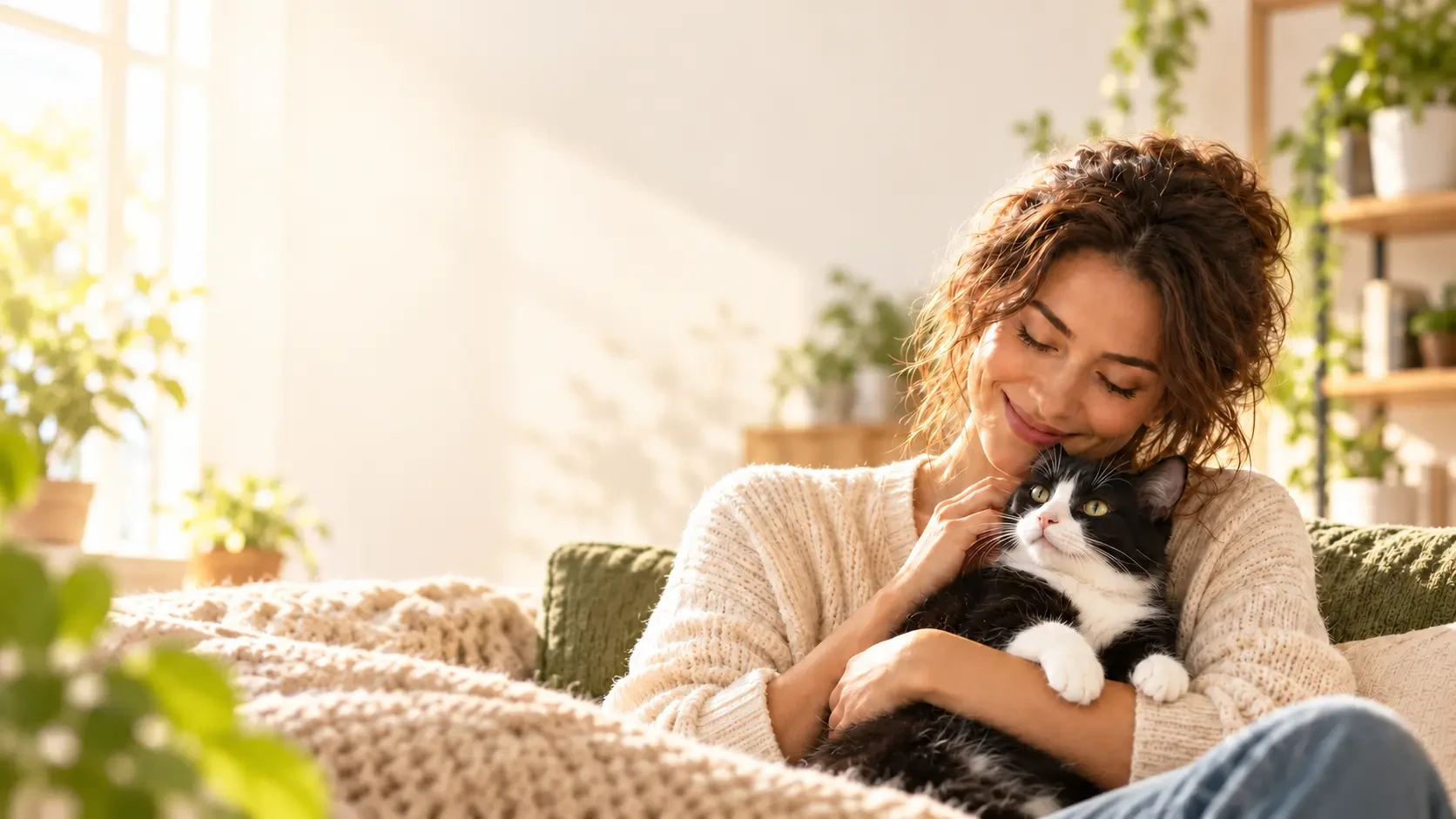
A hopeful message, not a guarantee: many families can explore safer, evidence-based options before rehoming.
Investigate safely before saying goodbye
Allergies can turn an ordinary cuddle into a frightening question: Do we have to give up our cat? Often, the best first step is not a rushed goodbye. It is a careful plan that protects people while respecting the animal who depends on them.
THE HUMAN QUESTION
The Question Behind So Many Posts
A mother notices that her toddler breathes comfortably outdoors but struggles inside a studio apartment. An adult who lived with cats for years suddenly develops sneezing, watery eyes and congestion. Another owner, facing both severe symptoms and a move, believes rehoming a beloved cat may be the only responsible choice.
These are composite situations drawn from recurring public conversations, not quotations from individual people. What they share is a painful conflict between human health and the human-animal bond.
The answer is not the same for every household. Severe asthma or breathing difficulty can make separation necessary. But many families deserve the chance to investigate the trigger, reduce exposure and measure whether a layered plan makes daily life safer.
FEL D 1
Cat Allergy Is Not Really About Cat Hair
Cat allergy is a reaction to proteins, not to fur itself. The best-known is Fel d 1, a protein found especially in cat saliva and skin secretions. When a cat grooms, saliva spreads across the coat. As associated particles dry, they can become airborne and settle on sofas, bedding, carpets and clothing. Exposure can continue even when the cat is not in the room.1 4
That is why a close haircut or “teddy bear cut” is not a reliable allergy solution. It may reduce some loose hair, but it does not stop a cat from producing Fel d 1. Any grooming change should prioritize the cat’s skin, temperature regulation and stress level and should be discussed with a veterinarian.
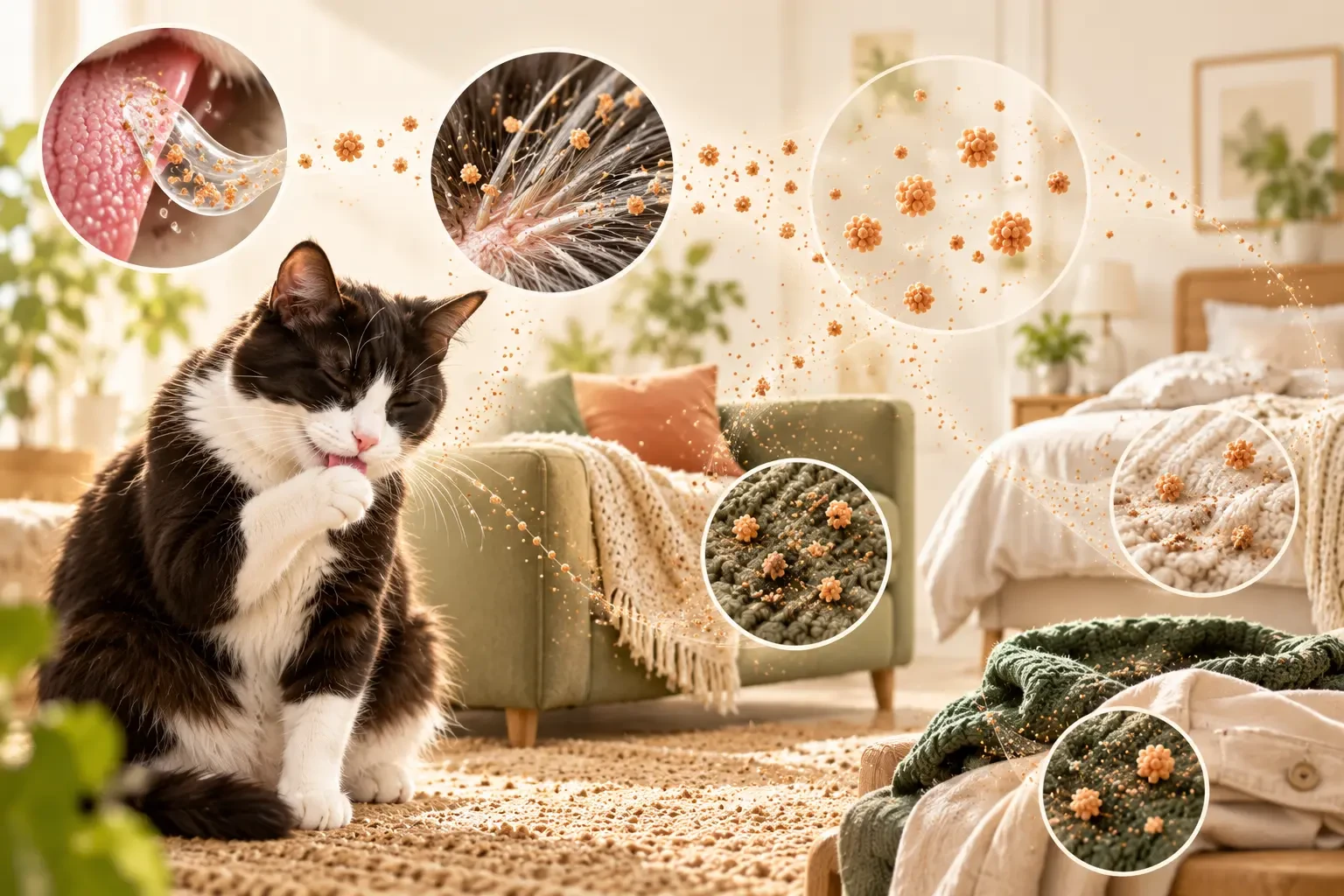
Figure 1. Cat hair is a carrier, not the root cause. Fel d 1 can move from saliva to fur and then into air and fabrics.
EXPOSURE CHANGES WITH THE HOME
Why Symptoms Can Seem to Appear Suddenly
Pet allergy is not always obvious. AAAAI notes that long-term exposure may produce chronic symptoms, such as persistent congestion, rather than an immediate reaction. Dust mites, mold, smoke and other indoor exposures can also cause or aggravate similar symptoms. Timing alone does not identify the trigger; an allergist can evaluate the pattern and may recommend allergy testing.1
RULE OUT URGENT RISK FIRST
Safety Comes Before Every Product
Breathing difficulty is not a do-it-yourself experiment.
Severe breathing difficulty is an emergency. In children, warning signs include struggling for each breath, ribs pulling in, being unable to speak or cry normally, unusually fast breathing, or blue lips or face. Adults with severe breathing difficulty, rapidly worsening throat swelling, blue or grey lips, or confusion also need immediate emergency care. Follow local emergency guidance. For ongoing symptoms or suspected asthma, speak with a qualified clinician or allergist.3 6
SOURCE · AIR · SURFACES
A Layered Home Plan
No single measure removes every allergen. A more practical approach is to reduce exposure at several points and then watch what changes. Start with measures your household can sustain consistently.2
Protect sleep
Keep the cat out of the allergic person’s bedroom, close the door, wash bedding regularly and avoid transferring cat-covered clothing onto the bed.
Filter the room you actually live in
Choose a portable air cleaner with a particle CADR appropriate for the room or open-plan area. HEPA filtration is common, but room sizing, unobstructed airflow, sufficient run time and regular filter replacement all matter. Avoid devices that intentionally produce ozone.
Control particles at surfaces
Use a HEPA-filter vacuum, damp-dust rather than dry-dust, wash throws and soft furnishings when possible, and consider reducing rugs or other dust reservoirs.
Improve the whole indoor environment
Ventilate when outdoor conditions allow and investigate dampness, mold, smoke, fragrances and other irritants. Filtration supplements source control and ventilation; it does not replace them.
Track the pattern
Record symptoms, rooms, activities and changes for two to four weeks. Change one major variable at a time when practical so the conversation with a clinician is based on a pattern rather than memory.
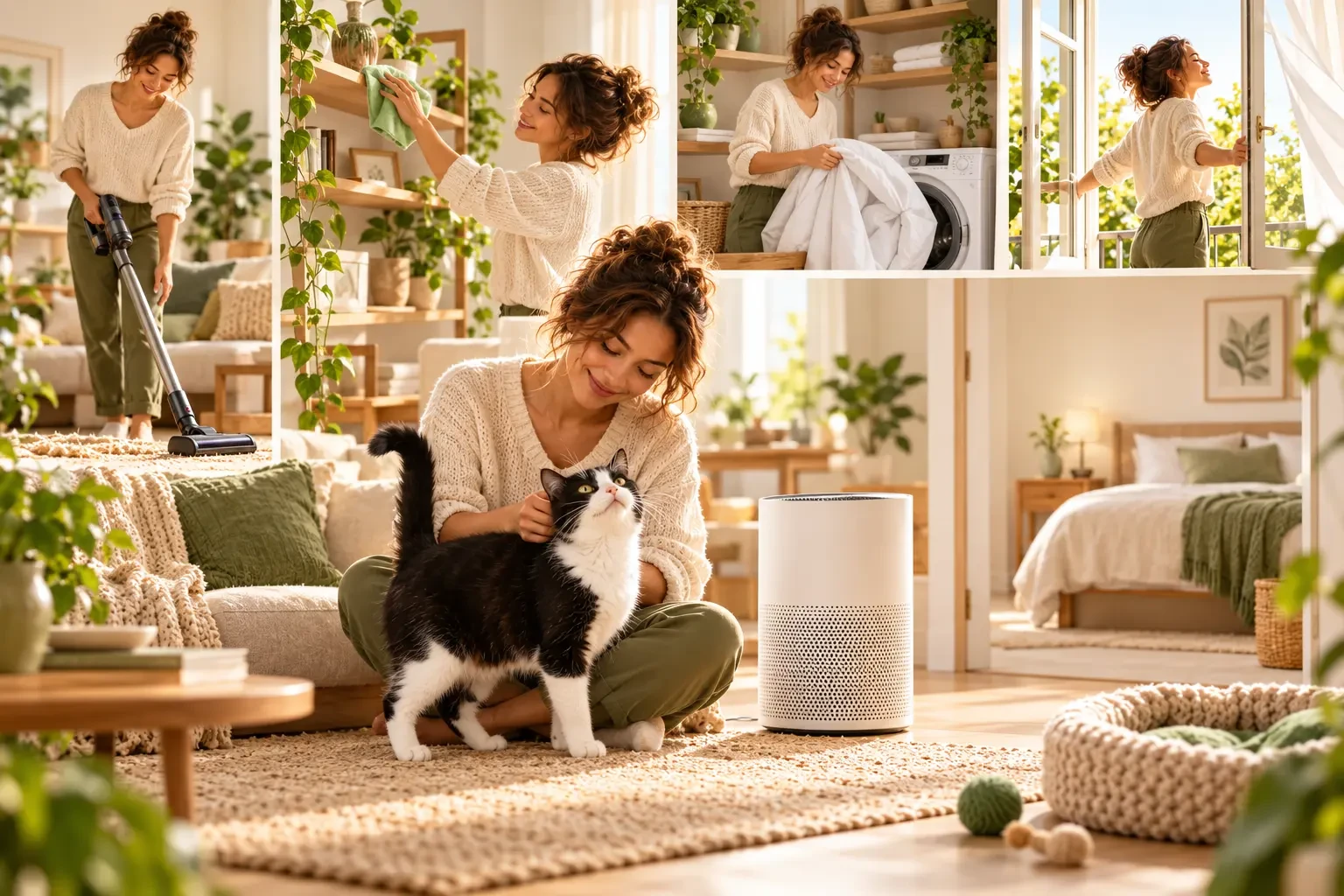
Figure 2. A practical approach is layered: medical guidance, source control, ventilation, filtration and repeatable cleaning routines.
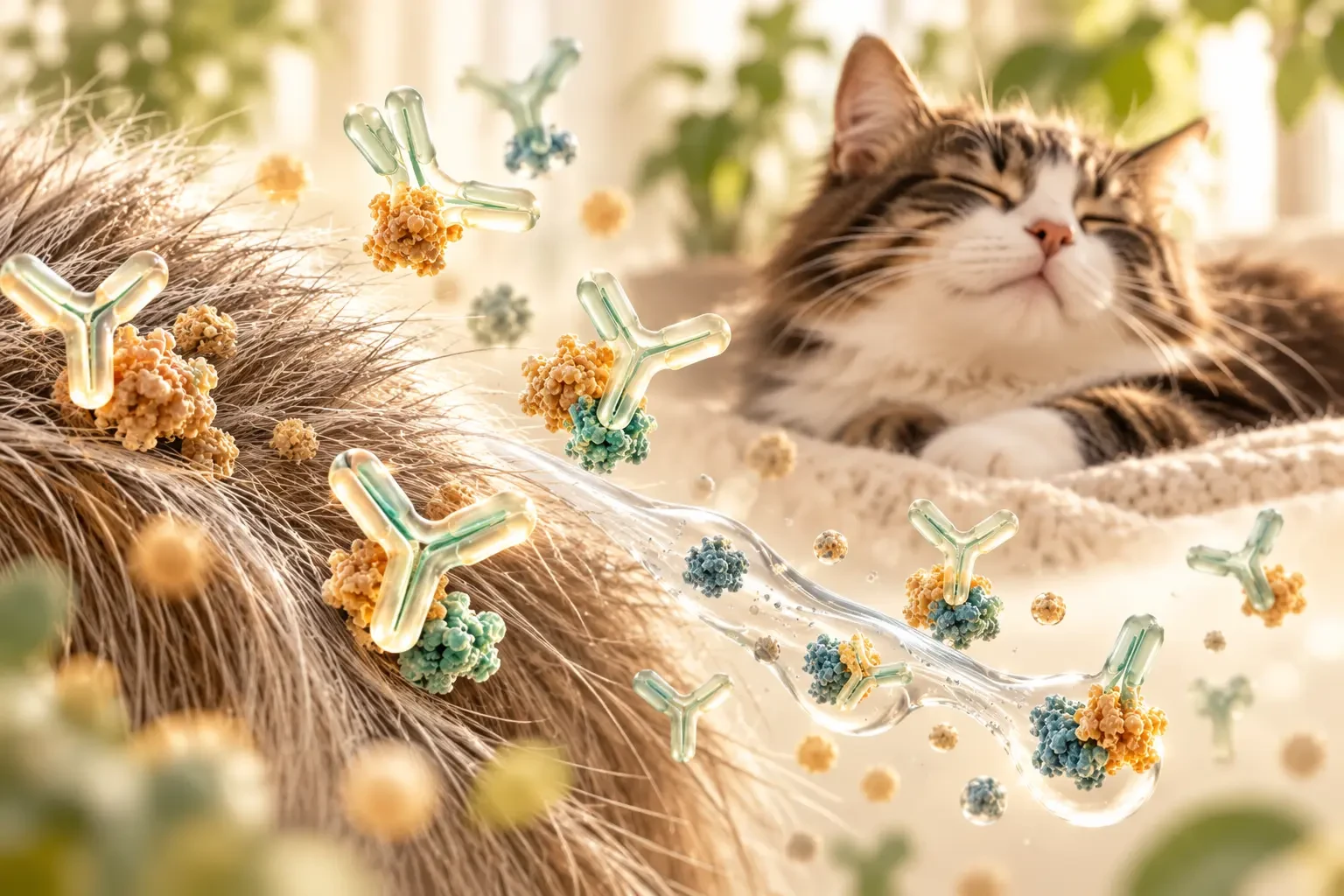
Figure 3. Concept illustration: allergen-specific IgY can bind Fel d 1. It does not treat or reprogram the human immune system.
EGG-YOLK ANTIBODY
Where IgY Fits in the Science
Anti-Fel d 1 IgY is a target-specific antibody obtained from egg yolk. In a Nestlé Purina-funded controlled cat-feeding study, food containing approximately 8 ppm anti-Fel d 1 IgY significantly reduced immunologically active Fel d 1 in saliva by week 3. A separate 105-cat before-and-after study reported significant reductions in active Fel d 1 on hair from week 3 and a 47% average decrease by week 10.4 5
Neither study was a clinical trial of allergic people, and both evaluated specific Purina formulations; the hair study had no concurrent control group. The results support the general anti-Fel d 1 IgY mechanism, but they do not directly validate OKCLEAR, prove all IgY products equivalent, make a cat allergen-free, or guarantee human symptom relief.
PRODUCT BOUNDARY
What OKCLEAR Is — and What It Is Not
OKCLEAR is an IgY-based product for source-side cat-allergen management; it is not presented here as a human medicine. The studies cited above support the general anti-Fel d 1 IgY mechanism, but they do not validate OKCLEAR’s product-specific performance. Any OKCLEAR reduction claim must be tied to its own validated test data, tested use conditions and the rules of the destination market.
MAKE THE PLAN DELIBERATE
Before Rehoming, Make a Deliberate Plan
A compassionate plan protects both the person and the cat. If there is no immediate medical emergency, work through these steps with the relevant professionals.
Confirm the likely trigger
Do not assume every indoor symptom comes from the cat; ask about allergy testing and other environmental causes.
Set a safety threshold
Agree with the clinician on which symptoms mean the trial must stop and when urgent care is needed.
Create a protected room
Make the allergic person’s sleeping space the cleanest, most consistently cat-free area in the home.
Apply the layers consistently
Combine source control, appropriately sized HEPA filtration, cleaning, ventilation and any clinician-directed treatment.
Evaluate products honestly
Use only as directed and look for product-specific evidence rather than broad claims borrowed from another formulation.
Reassess rather than guess
Review the record with the clinician after a defined period and decide whether the plan is safe enough to continue.
Sometimes, despite careful work, the safest decision will still be temporary fostering or responsible rehoming—especially where asthma is uncontrolled or a child is struggling to breathe. That is not a failure of love. If separation becomes necessary, use a reputable rescue, foster network or screened adopter. Never abandon an indoor cat outdoors.
HOPE BEGINS WITH CLEARER OPTIONS
Goodbye Should Not Be the First Step
The goal is not to make a medical promise. It is to create options. With a confirmed diagnosis, clinician-directed treatment when needed, and sustained exposure-reduction measures, some households may be able to continue living with their cat. This cannot be predicted for every person, particularly when asthma is uncontrolled.
This time, before you say goodbye, ask one more careful question: Have we tried the safest reasonable plan, with evidence and with help?
PARTNER WITH OKCLEAR
Help Us Make This Option Accessible
OKCLEAR is looking for responsible distributors, importers, pet retailers and e-commerce partners who understand that cat-allergen management requires both empathy and evidence. We welcome conversations about local compliance, product evaluation, education and carefully designed market trials.
info@okclearpet.comExplore the powder
EVIDENCE AND BOUNDARIES
References and Further Reading
These sources support the general medical, indoor-air and IgY background in this article. Product-specific OKCLEAR claims should rely on OKCLEAR’s own validated evidence and the rules of the destination market.
-
1Pet Allergy — American Academy of Allergy, Asthma & Immunology
-
2Home Air Cleaners Guide — U.S. Environmental Protection Agency
-
3Breathing Trouble Symptom Checker — HealthyChildren.org, American Academy of Pediatrics
-
The authors reported employment by Nestlé Purina. This study does not directly validate OKCLEAR or prove human symptom relief.
Important Medical Note
This article is for general education only. It is not medical advice, diagnosis or treatment, and it does not establish that OKCLEAR is suitable for any individual. Seek qualified medical care for allergy or asthma concerns. Breathing difficulty, blue lips or face, severe wheezing, or rapidly worsening throat symptoms require urgent assessment.
Scene note: The family situations in the opening are anonymized composites based on common themes in public discussions. No identifiable person’s story or wording has been used.
CONTINUE READING
LIVING GUIDEFrom household pain to a sustainable routineRESEARCH BRIEFFrom Fel d 1–8 to the shared home
OKCLEAR
Questions about the evidence or the products?
Email opens in your own mail app. We reply with materials according to the project scope.